Jan Schmitt de Wandaleer
Los pacientes del doctor GarcíaJan Schmitt de Wandaleer is a Flemish-German volunteer whose fierce insistence on his full name embodies the two inheritances he claims as his own. A multilingual, funny, generous comrade and a committed Nazi, he is also the friend who repeats that Jewish victims are not human while standing beside mass murder. His bond with Adrián Gallardo carries that contradiction from the Eastern Front to Berlin, where his final choice is to leave with Agneta Müller rather than die defending the Reich.
Identity and Family Background
In Antwerp on 20 September 1941, the recruiting officer greets Jan with a smile and asks his name. Jan gives all four words: Jan Schmitt de Wandaleer. The full form matters to him. His mother chose Jan, the name of her firstborn; Schmitt is his German father’s surname; de Wandaleer is his mother’s. When the officer wonders whether the name is compound, Jan makes the distinction explicit: his names are not an affectation but the pieces of an identity he has always used.
Jan was born in Buenos Aires and grew up between the German identity he inherited from his father and the Flemish identity associated with his mother. His father, Klaus Schmitt, had emigrated from Hamburg after conflict with his elder brother over the family jewelry business. The family’s losses later became, in Klaus’s telling, evidence against Jews: he blamed Jewish lenders for the business’s collapse, rather than his own and his brother’s decisions. Johann died by suicide after losing the business; Martin had been killed at Verdun when Jan was six months old, and Josef was left in a wheelchair. Klaus repeatedly mourned these tragedies as injuries that had enriched Jews. His children heard the grievance, but Jan alone inherited its hatred.
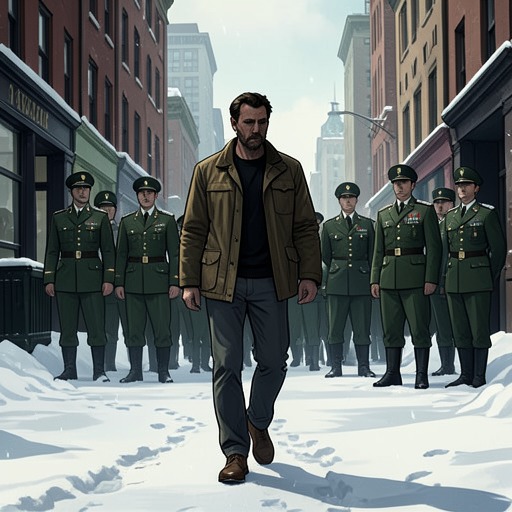
Hitler’s rise to power renewed Klaus’s hope of returning to Germany. Jan shared that longing, but Klaus died suddenly of heart disease in 1935, before it could be fulfilled. In 1936, Jan persuaded his widowed mother, Marijke, to return to Europe. She would go to Flanders, where her brother Geert lived, rather than to Germany; Jan accepted because he imagined Antwerp as a step closer to his Hamburg cousins. Years later, when he enlists, he is already affiliated with the Flemish National Union and the Hitler Youth. He chooses the Flemish Legion rather than another SS division, declaring himself equally proud of both lineages.
From Interpreter to Adrián’s Friend
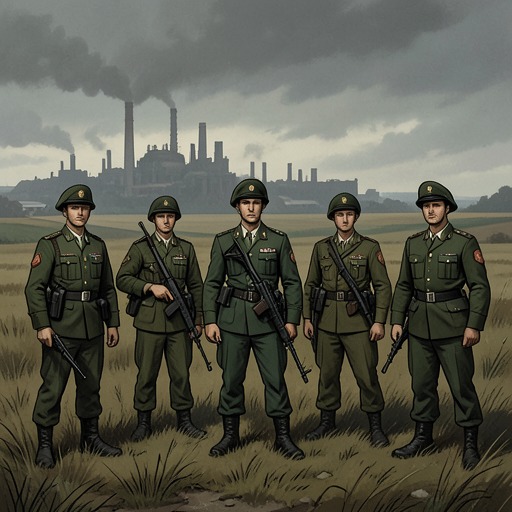
A stray bullet kills the interpreter in Adrián’s company soon after Adrián reaches the Kolpino front. With no other available man who speaks Spanish, Jan’s unusual range of languages makes him useful: he speaks Buenos Aires Spanish and German with a Flemish accent, while mixing in Dutch words. His second surname proves difficult for the divisionaries, who drop it in everyday use. The linguistic skill that secured his reassignment from the Flemish Legion to the Blue Division does not make him fit neatly into either group; his different speech irritates listeners on both sides even as the army needs his interpreting.
Jan and Adrián become friends quickly. Jan is two years older and about the same height, but so thin that he looks younger. Their companionship answers different needs. Adrián, a celebrated boxer, is tired of soldiers disturbing the trenches to ask for autographs and is troubled by the gap between his public reputation and his private sense of himself. Jan is interested above all in politics and can talk at length about Hitler, gendered ideologies, and the supposed genetic defects of Marxists, even when Adrián contributes little. Adrián finds the talk companionable; in time he even grows fond of Jan’s Spanish, which most Spaniards dislike. In return, Adrián’s standing protects Jan from the mockery and imitation he endured when he first arrived at the front.
Jan’s conversation also has a less harmless side. He argues that Slavs are inferior, comparing them to animals that can kill humans without thereby becoming human. Adrián initially answers with incredulity, pointing out that Russian soldiers are beating them in battle. Jan calls his position scientific truth and treats the comparison as proof rather than argument. Adrián stops raising the subject because Jan’s vehemence frightens him, but he still sees his friend as brave, loyal, generous, and kind to vulnerable comrades. Jan shares what he has, pays his debts, does not cadge tobacco, and risks himself to help others. He can weep for dying comrades and has a singular sense of humor; he does not play cruel practical jokes. The narrative holds these qualities beside, rather than in place of, the hatred rooted in his family’s inherited grievance.
Klooga and the Limits of Denial
On the journey from the Leningrad front toward Ukraine and the Baltic, the two men pass trains, barbed-wire enclosures, barracks, and the walls of city ghettos. Adrián sees Jewish prisoners marked with yellow stars and witnesses the arbitrary humiliations inflicted on people in the streets. Jan appears to see the same scenes through his racial doctrine. He calls the victims two-legged mammals rather than human beings, insisting their exclusion is self-evident and needs no defense. He does not personally join the assaults, saying he will not dirty his hands, but his refusal to participate does not prevent him from accepting the persecution around him as just. Adrián accommodates Jan’s speech in part because he depends on his friend to navigate an unfamiliar army, and in part because he persuades himself that cruel ideas may never become an inescapable reality.
At Klooga, that separation between words and action collapses. Adrián and Jan are present as the camp’s prisoners are selected for execution. As guards separate men and women, Jan murmurs that the victims are not human, conceding that they look it before returning to his claim that they are only mammals. Adrián, who has already taken part in shootings, rejects the excuse in a low, blunt answer. The scene makes the doctrine’s function unmistakable: it offers a language for looking at people and denying the ethical claim their presence makes.
For three days, 20 to 22 September 1944, the men serving under Kleiber drink vodka with their meals and help the Klooga guards murder prisoners. Approximately 550 people are killed per day; the soldiers’ share is 400 each day, 1,200 in total. Jan stops needing to announce before every volley that the victims are not human. Adrián still knows they are human, but no longer cares enough to resist what is happening. The two friends’ responses are not identical, yet both are implicated in the killings. As their unit retreats from Narva toward Latvia, Klooga follows them as a haunting silence: the men do not speak naturally about the forest, though they speculate about whether Soviet forces will find the bodies or identify the killers.
Berlin: Confidences and a Narrow Escape
In Berlin, as defeat becomes certain and shortages keep the soldiers idle, Jan and Adrián spend their time talking. In the spring sunlight in a ruined garden, sharing their remaining tobacco, they exchange confidences that deepen as each recognizes that a conversation may be their last. Adrián admits that his victory over Navarro in Bilbao was a fraud. Jan tells him that his mother has abandoned him: she no longer writes, and he imagines her in Buenos Aires with his brother, enjoying Sunday asados and listening to Gardel while he fights for Europe. His complaint reveals how far the son who once persuaded Marijke to return to Europe has come to feel discarded by her.
On 10 April, a Soviet bombardment brings down the building while Jan is in the basement latrines. Adrián is trapped beneath rubble, shielded by an iron beam that catches in the debris. Jan and the Hungarian volunteer Lazlo find a way down and pull him out. Jan explains the escape with his characteristic irreverence: after six days of constipation, he had finally gone to the toilet, and the timing spared him from the collapse. The joke does not erase the danger. Adrián has a dislocated left shoulder and a severe wound in his upper arm; Lazlo binds him as best he can. The building has few survivors and no officers, many of whom were killed while sheltering beneath the only intact roof. Jan’s survival and quick action make his comic story inseparable from the practical loyalty that has sustained their friendship.
When Agneta Müller appears, Jan’s voice and his compliment to her unsettle Adrián. Adrián recognizes his own jealousy and, before he can admit it, his love for Agneta; he also senses that Jan’s response carries a similar emotional charge, though he refuses to name it. Adrián wants to tell Jan that Agneta has changed his wish to die, but does not find a moment to speak privately. Five days later, at dusk on 30 April, Agneta leaves the hollow in Wilhelmstrasse with Jan. She has managed to reach the garden of the Reich Chancellery and then goes off with Thomas, a lieutenant who recognizes her; after she returns, she and Jan improvise a way to remain together while Adrián goes to the hotel alone.
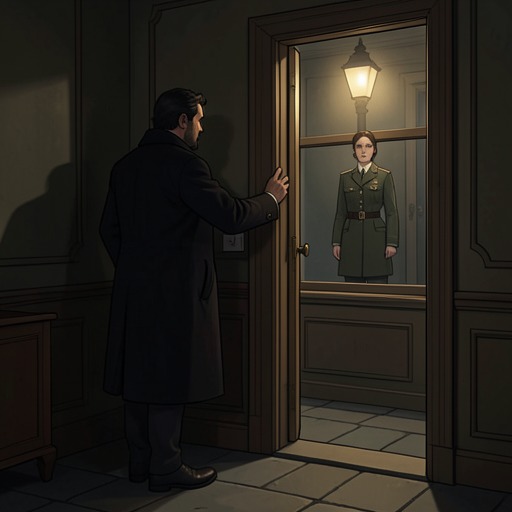
After eating, Jan takes Adrián aside. He says he loves him, explains that Agneta wants to return home, and says he will go with her. He invites Adrián to come too, acknowledging that they had arrived intending to die in defense of the Reich but that everything has changed. Jan concedes that Adrián saw Agneta first and loves her, yet says she is free to choose. Adrián answers that Jan has been the best friend he has ever had, even while calling him a son of a bitch. Then Adrián knocks Jan down with a right hand so Agneta can reach him and try to revive him. Adrián leaves; when he returns to the hollow hours later, only Alfonso Navarro remains. Jan’s final departure from the story is therefore neither a reconciliation nor a shared escape: he chooses life and Agneta, but his friend renders him unconscious before he can leave with them.
Character and Narrative Significance
Jan is defined by the distance between his conduct toward individual comrades and his willingness to deny humanity to whole populations. His generosity and courage are real, but they coexist with an inherited antisemitism that he recasts as scientific certainty. At Klooga, the language that once seemed to Adrián an ugly excess accompanies participation in organized murder; afterward, Jan no longer needs to repeat it before each killing. The change is chilling precisely because it is not presented as a dramatic conversion. The ideology has become so settled that it no longer needs to be spoken aloud.
His full name and shifting allegiances also give his story a persistent tension between inheritance and choice. He identifies himself as German and Flemish, is born and raised in Buenos Aires, serves first in the Flemish Legion and then with the Blue Division, and finally leaves Berlin with Agneta rather than continuing to defend the collapsing Reich. His attachment to his mother’s surname expresses a claim to belonging, while his complaint that she has stopped writing exposes the loneliness beneath that claim. The friendship with Adrián likewise binds intimacy to complicity: the two men depend on one another, rescue and protect one another, confess private truths, and stand together at Klooga. In the ending, affection does not resolve that history. It makes their separation more painful and leaves Jan’s fate after Adrián’s blow unstated.